

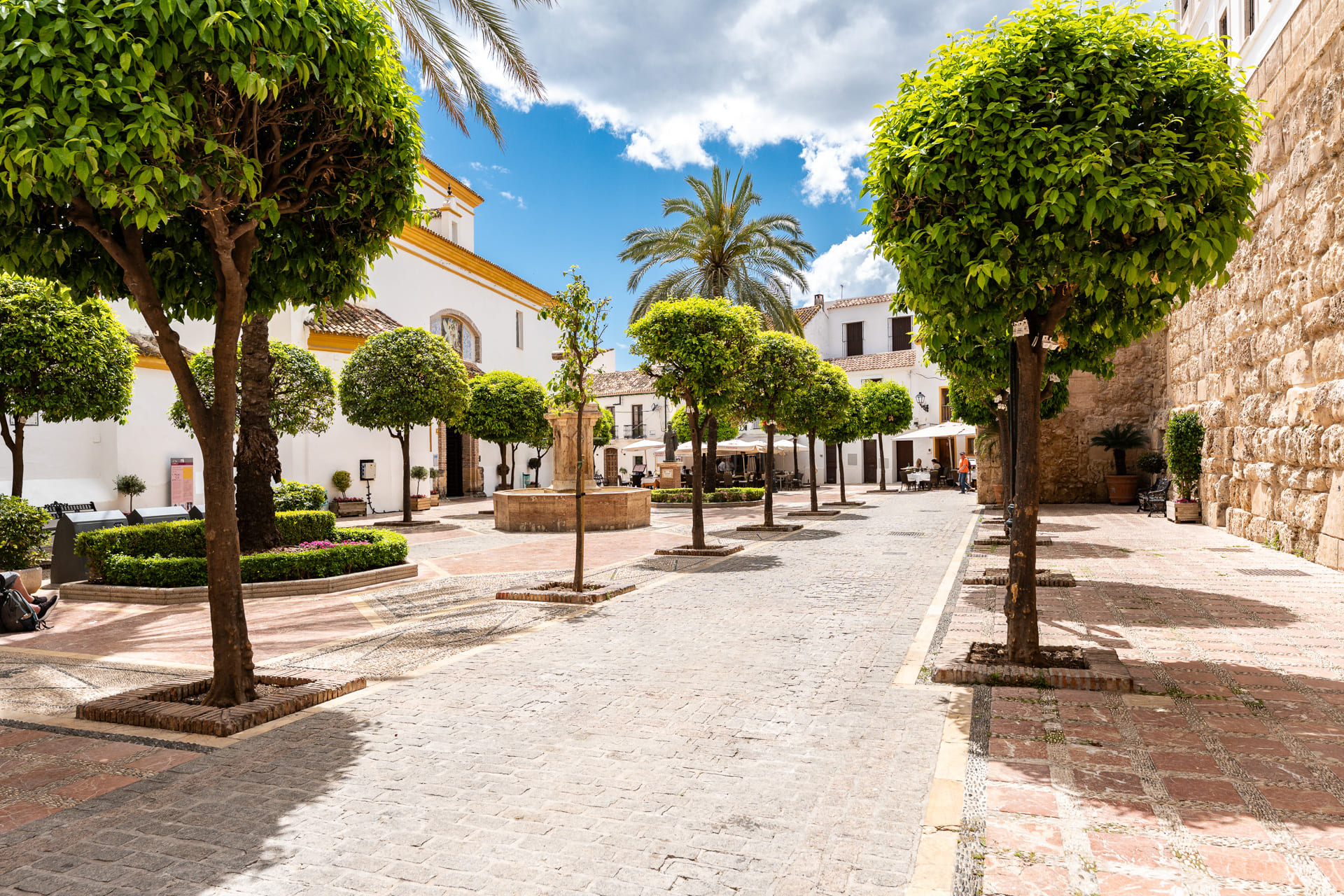
Marbella is often associated with beaches, elegant hotels and glamorous marinas, but the historic centre reveals a very different side of the city. Behind its whitewashed façades and flower-filled balconies, Marbella Old Town preserves centuries of Andalusian history, local traditions and everyday life.
The Marbella old town map is useful for finding the main landmarks, but the real pleasure comes from exploring the narrow streets in person. Distances are short, much of the area is pedestrianised, and many of its most interesting details appear in unexpected corners rather than beside the main roads.
This guide takes you through the essential stops, from Marbella Orange Square and the historic Town Hall to the castle walls, churches, traditional streets and local food market.
How to Use This Marbella Old Town Map
The Old Town, known locally as the Casco Antiguo, is compact and easy to explore on foot. Most of its principal attractions are located within a ten-minute walk of Plaza de los Naranjos.
A practical route begins at Alameda Park, crosses Avenida Ricardo Soriano and enters the historic quarter through one of the streets leading towards Orange Square. From there, you can visit the Town Hall, Santiago Chapel, the Church of Our Lady of the Incarnation and the remains of Marbella Castle before continuing towards Calle Ancha.
The streets do not follow a perfectly straight grid. This is part of their charm, but it also means that a map is helpful when you have limited time. Allow at least two hours for the principal sights, or half a day when you want to visit the museum, stop at the market and enjoy lunch.
Marbella Orange Square: The Heart of the Old Town
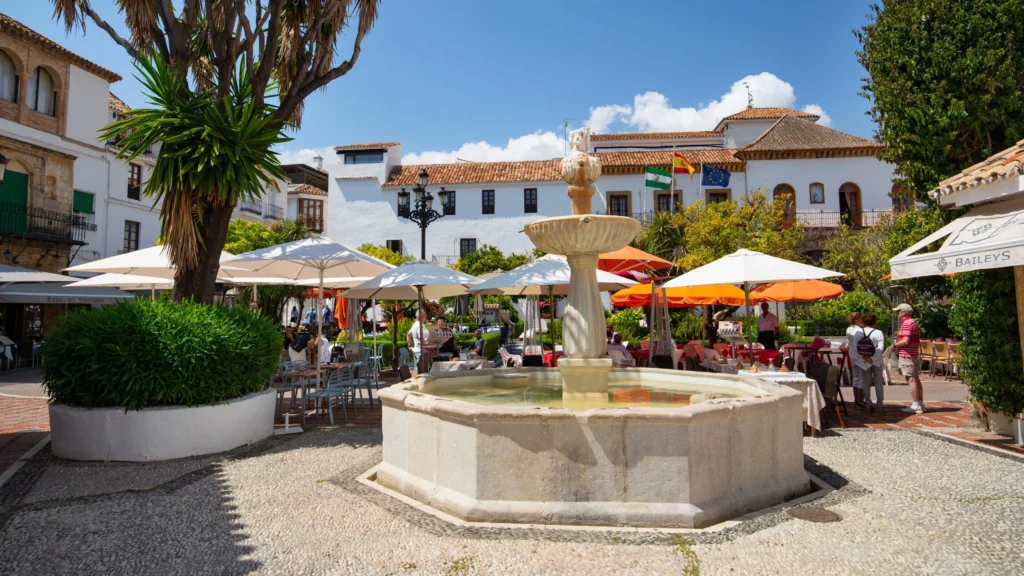
Marbella Orange Square, officially called Plaza de los Naranjos, is the natural starting point for any Old Town walk. Created after the Christian conquest of the city, it became Marbella’s civic and administrative centre.
Today, orange trees, traditional façades and outdoor terraces give the square its recognisable appearance. It is one of the liveliest places in the historic centre, particularly in the morning and around lunchtime.
It deserves more than a quick photograph. Stand in the centre and look closely at the different buildings surrounding the square. Together, they show how Marbella developed over several historical periods.
Visiting early in the morning offers a calmer atmosphere and clearer views of the architecture. Later in the day, the square becomes busier and provides a pleasant place to sit and watch daily life unfold.
Marbella Town Hall
The historic Town Hall Marbella visitors see in Orange Square dates from the 16th century. Its façade, balcony and inscriptions make it one of the square’s most important buildings.
The Town Hall remains closely connected to civic life. Even when the interior is not open for general visits, the exterior helps explain the role Plaza de los Naranjos has played in Marbella’s administration and public ceremonies.
Rather than viewing it as an isolated monument, consider its position within the square. It was deliberately placed at the centre of political and commercial activity, reinforcing the importance of the surrounding area.
Santiago Chapel
Santiago Chapel is a small religious building on Orange Square and one of its oldest landmarks. Its restrained appearance contrasts with the more elaborate façades nearby.
Because of its size, visitors occasionally pass it without noticing. However, it is an important part of the square’s history and shows how civic and religious life developed side by side in the centre of Marbella.
The Church of Nuestra Señora de la Encarnación
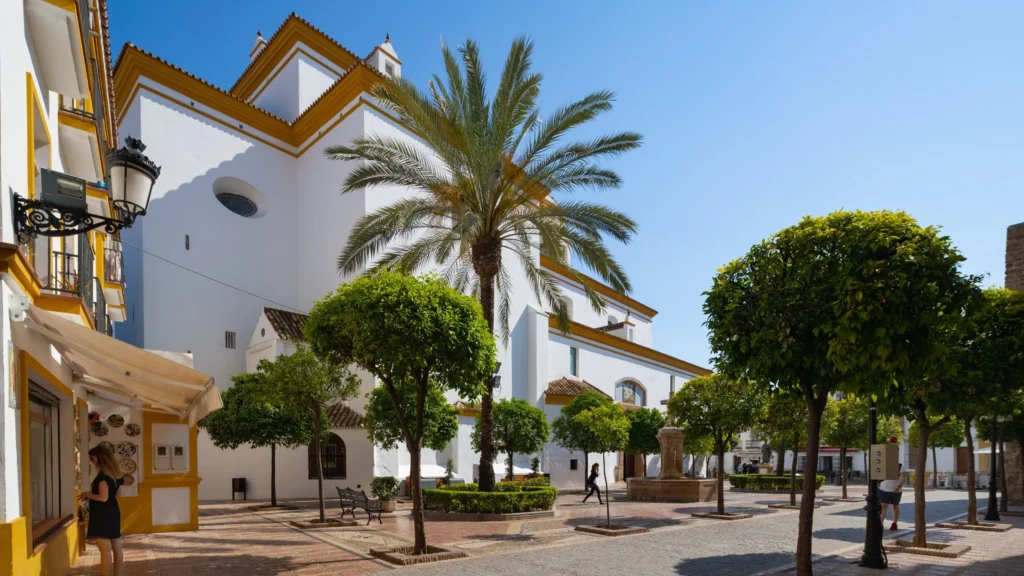
A few streets from Orange Square stands the Church of Nuestra Señora de la Encarnación. Its scale makes it one of the most prominent religious buildings in the historic centre.
The church occupies a site closely connected to the transformation of Marbella following the Christian conquest. Its stone entrance, spacious interior and large organ provide a clear contrast with the intimate streets surrounding it.
Visitors should enter quietly when the church is open and no service is taking place. Even a brief visit offers a better understanding of the city’s religious heritage and architectural development.
The adjoining square also gives you space to pause before continuing towards the castle walls and museum district.
Marbella Castle Walls
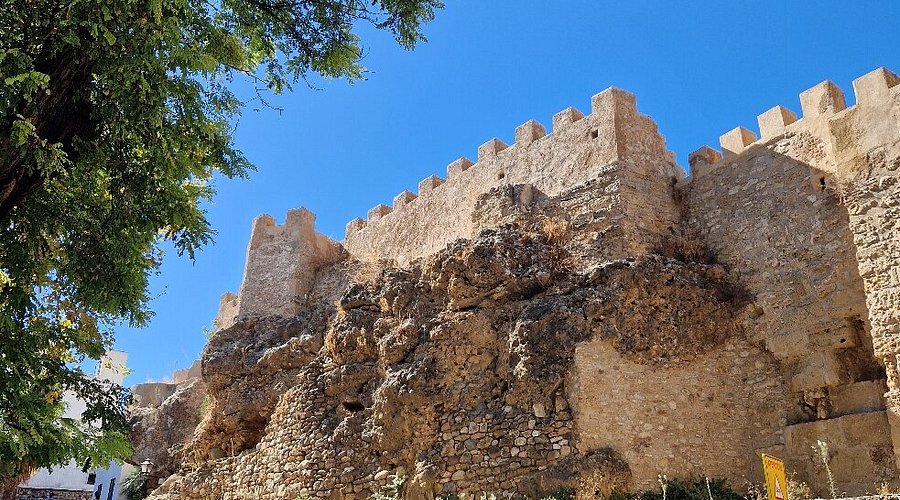
The surviving castle walls are among the most important physical reminders of Marbella’s Islamic past. They once formed part of a defensive complex that protected the settlement before the city expanded beyond its historic boundaries.
Only sections of the structure remain, but their scale is still impressive when seen from street level. Thick masonry, towers and irregular stonework reveal a Marbella that existed long before the modern resort developed.
This is precisely why the walls should be visited in person. Photographs rarely communicate how closely they are integrated into the present-day town. Homes, streets and local businesses now stand beside structures that have survived for centuries.
Walk around the perimeter rather than viewing only one section. Different streets reveal different perspectives and make it easier to understand the original size of the fortification.
Calle Ancha and Santo Cristo Square
Calle Ancha is one of the most attractive streets in Marbella Old Town. Its traditional houses, balconies, plants and decorative details create the classic Andalusian setting many travellers hope to find.
The street leads towards Santo Cristo Square, a small and colourful space beside the Chapel of Santo Cristo. The square feels quieter than Plaza de los Naranjos and provides a good example of the Old Town’s residential character.
This part of the route is not about visiting a single major monument. Its value lies in the complete streetscape: carefully maintained façades, tiled entrances, shaded corners and small architectural details.
Take your time here. Looking upwards often reveals balconies and decorative elements that are easy to miss when following a map too closely.
The Spanish Contemporary Engraving Museum
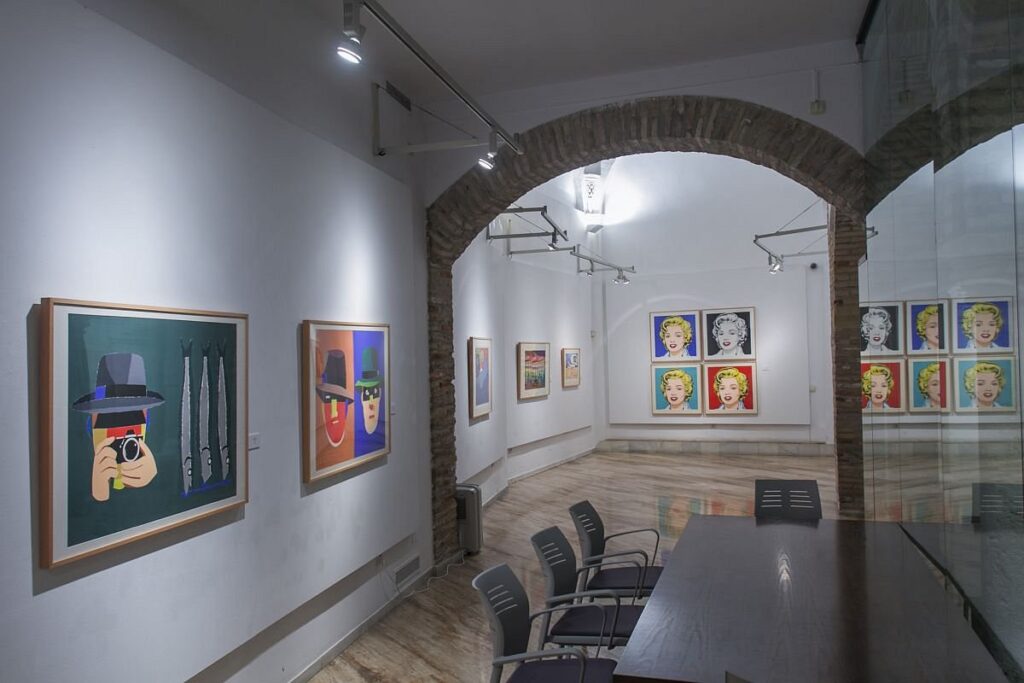
The Spanish Contemporary Engraving Museum adds an artistic stop to the historical route. Housed in a historic building, it brings together heritage architecture and works of modern Spanish graphic art.
It is a worthwhile choice for visitors who want more than an outdoor sightseeing walk. The museum provides a quieter experience and introduces an aspect of Marbella that is often overshadowed by its beaches and luxury image.
Check the current opening hours before visiting, particularly on Sundays, Mondays or public holidays. A typical visit can be incorporated into the walking route without requiring a major detour.
Marbella Food Market
The Marbella food market, or Mercado Municipal, offers a glimpse of everyday local life. Unlike the principal monuments, its purpose is practical: residents come here to buy fruit, vegetables, meat, fish and other fresh products.
A market visit adds a gastronomic dimension to the route. It helps travellers understand the ingredients behind Andalusian cooking and provides context for the tapas and seafood served around the city.
Morning is normally the most interesting time to visit, when the stalls are active and the fresh produce is fully displayed. Remember that this is a working market rather than a staged tourist attraction. Move respectfully, avoid blocking customers and ask before taking close-up photographs of traders.
The market also makes a useful stop before lunch, especially for travellers interested in local food culture.
Alameda Park and Avenida del Mar
Although Alameda Park sits just outside the historic core, it is a convenient starting or finishing point. Shaded paths, ceramic benches and mature trees provide a comfortable place to rest before entering the busier streets.
From the park, continue towards Avenida del Mar, the pedestrian walkway connecting central Marbella with the seafront. The contrast is immediate: within a few minutes, you move from historic streets to open Mediterranean views.
Including both locations helps place the Old Town within the wider city. Marbella’s historic centre is not separated from the coast; it forms part of a compact urban area that can be explored almost entirely on foot.
Why Explore Marbella Old Town with a Local Guide?
A map shows you where to go, but it cannot always explain what you are seeing. Historic façades, street names, religious buildings and surviving sections of the castle become more meaningful when placed within the story of the city.
At Marbella Life Tour, we create a Marbella tour for travellers who want to discover the city in a more personal, elegant and authentic way — one of the best things to do in Marbella for those seeking real culture, not just the beach.
From a carefully selected range of tapas and wines to the most charming corners of the Old Town, every experience is designed to help you enjoy the city as a guest, guided by a local friend.
A guided experience is particularly useful when you have limited time or want to move beyond basic dates and names. Local context can reveal why certain streets curve, how the Old Town changed over time and which culinary traditions continue to shape life in Marbella.
Discover more about our Old Town Tours and enjoy a more personalized experience. Make your visit an unforgettable memory.